Showing posts with label Game of Thrones. Show all posts

Friday, 6 March 2015

Some Love for Rush

As a soundie, it's my duty to bring these things up as frequently as possible, so let me set you a scene and make this drag out for a little longer than it otherwise would.

So yes, a scene for you all. My life is a fairly simplistic one most of the time, and a lot of that time is spent sat in my armchair, with music churning out from the speakers on my desk. And before you say anything, having an armchair at 21 is absolutely fine, and if you tried it, you wouldn't have life any other way. So yeah, chair, music and getting engulfed in the sound, singing along to whatever is playing. Singing? I can't sing? I'm not singing, this is more humming, but feels like I'm singing to something on the radio? This is confusing. In short the Rush soundtrack was on and I was completely engulfed.


Chris Hemsworth as James Hunt, Daniel Brühl as Niki Lauda

For those of you unaware, Rush is a film made in 2013, set through the mid-late 1970s, following the careers of racing drivers James Hunt and Nikki Lauda. As much as I love this film as a whole, the soundtrack is the one thing I'm going to pick out as being something especially catchy, and easily on par with what gets released in the charts.

Soundtracks in movies often come in two forms, either a collection of tracks picked to fit with scenes within the film, or there's the hiring of a composer who will write music with the scenes in mind and you end up with a collection of tracks within a similar style to underscore the film. Sometimes is a collection of both. This is the category into which this film falls.


Now I'm probably just going to litter the post with these, so hopefully you can just listen along per paragraph, almost, I'm going to fail hugely should I try to make 3 minute long paragraphs. But I reckon my first point, with the reference of the clip above is going to be the mild genre crossovers. Not that soundtracks have genres, obviously, but you know the conventions I mean, don't you? I'm hinting towards the heavy use of strings, the heavy use of fully composed orchestral pieces, either classed as classical, or contemporary classical I reckon. Anyway, the first track on the list, 1976, is almost a half and half beast, beginning as a string focused track, before spilling over into the drum, guitar & cello heavy groove of the rest of the soundtrack. So enjoyable. A simple pleasant phrase that runs throughout, and a tempo fit for racing.


In a way, the film's setting within a rather rock & roll70s lifestyle, with Bowie and Thin Lizzie to also on the soundtrack, bleeds into the music and gives it an extremely bluesey feel all over. With both '20%' and 'I could show you if you like?' giving raher awesome little interludes into the narrative. Both only notching in around a minute of screen time, but enough to stick memorably in the mind, and enough to seek them out afterwards and enjoy independently.


I mean seriously, these little phrases of music (probably too short to labelled as songs in their own rights) are easily enjoyed in any environment, and are not, as much film music is (and rightly so), reliant on the images in order to give themselves a purpose. They're not even overly emotive, lets face it. Listening to '20%' you can tell it's excitement, but in what setting? With it being a racing movie the first guess is always going to be the most obvious, part of a race, but then it'd also be fitting in any kind of party setting, or any other form of adrenaline rush. 'I can show you if you like?' is a little easier to figure out, so I don't have to expand on genre, however it's damn catchy.

Worst album review ever? Probably.

In short there's a helluva lotta drums & guitars.

Now for the finest and easiest track to listen to on the entire record. What the hell, I'll add this one in context with engine sounds and everything. Well half of it anyway, that way it's not as spoliery, and I care about spoilers.


Apparently this clip is blocked in the US, bloody copyright sensitive bastards.

'Lost but Won' is almost like a full expansion of '1976', similar kind of style, with the obvious underscoring to begin with, followed by the far more raucous second half. But in the grand scheme of the mix, the engines, car tyres squealing, and splashback off the cars means that the entire piece of music works as underscoring, and it only ever cuts through whenever the style dictates.

All in all the score feels like an incredibly brash reworking of Zimmer's style, still including the main elements of the occasional heavy hits, and stripping down his more expansive orchestral pieces into a single Rains of Castermere (Game of Thrones fans will know) lead line, with staccato guitar running throughout, a bass line that reminds you slightly of Fleetwood Mac's 'The Chain' (the current F1 theme music), and the occasional drum line reminiscent of the Joker themes from The Dark Knight. That there is a mix should really entice anyone in right?

No album star rating or some kind of out of 10 review because it comes as a package with the rest of the film, but as a complete work, go watch it. If you're not a huge racing fan you should find it fairly interesting and a gripping watch. If you're a fan of racing then you'll adore I'd assume? I mean it's a fantastic representation from the point of view of someone who's seen nothing to do with the time and setting before.

And if you're particularly into sound, I reckon you'll end up with goosebumps. Them engines.


Saturday, 28 February 2015

A case for the fuller frame?

Now, this is another cheat sort of post thing, and not along with the main premise of the blog, but it hit me, and I got it down here because otherwise I'd forget, because that's what happens to people that don't carry around notebooks with them at all times. I might get a notebook.

The next post will be about what this was actually set up for and not just a random one of these. Promise.

Anyway, this hit me while I was watching Birdman, which I may or may not have raved about ever so slightly last time I put something up here, but it was on screen and it just looked so good for some reason. Then it just dawned on me, it was 16:9.

Now, I'm not going to assume everyone knows what I'm on about when I say 16:9 and 2.35:1, but then I know that a pretty much everyone actually will, so here's literally the briefest explanation I can muster:

It's the aspect ratio of what you're watching. Pixel Width : Pixel Height. It doesn't matter about resolution of the image at all, could be any size at all, but what you're watching will usually appear in one of those two aspect ratios. The differences shown below:


16:9 - Shelter from the Storm Commercial (2014)
2.35:1 - Chalk (2014)

Now both of these stills are from tracking shots which I gripped, both are tracking backwards, and both have the intention of revealing the surroundings. It seems both have the same colour walls, I'd never noticed that before...

So, these two reveals, I remember what was outside the frames, and the massive time pressure associated with getting the chalk shot done, and the relatively easy time we had with Shelter. This is in comparison, both shots were tricky to get to their final form in their own rights.

So looking at those two as examples, I kinda feel like I like the 16:9 frame better? It's just a lot more... Full? Despite the fact that the still is closer to the subjects, and you are physically seeing a lot less of the space, the frame feels a lot fuller content wise. And I don't mean this in the way that the room seems emptier, here's another comparison for you.


16:9 - Under the Skin (2014)


2.35:1 - V for Vendetta (2005)


Now here's pretty much the exact opposite scenario, both of these stills contain just over half of the subject, and the 2.35:1 shot has a lot lot more to look at within the fame. Under the Skin arguably is the less interesting shot in terms of content, but, does anyone else feel a little short changed with V for Vendetta? The height and content of the still from Under the Skin feels a tad more gratifying to me, with a far nicer about of content, and I'll crop it down myself, leave in as much of the content and leave it below to see if you can see what I'm rambling on about.


Here's the exact same shot, but cropped down to the 2.35 aspect ratio

Now are you able to to almost understand what I'm explaining terribly? You may only be missing a little bit off the bottom of the steering wheel and the jacket, along with a touch off the top of the head and part of the van window frame, nothing special. Especially in a space quite this confined, I can really see why they went for the frame size at which they shot, it feels inclusive, intimate, and gives a far nicer representation of the space. I'd love to see more of the arches at the top of frame, and the make up of the table in that V for Vendetta still. I just feel like there's something I'm missing out of in that room, and I'm well aware that it may be because I've seen the film a number of times and my eyes are a-wandering to take a bit more in.

Below I'm going to shove in a still from Transcendence, which, when I watched it I thought it was alright, but could've been a lot grander in terms of scale. Some of the sets were lovely, some of the set pieces were rather impressive in ideas, but personally, I'd have liked to see it 'play out a bit taller'.


2.35:1 - Transcendence (2014)
Now I'd want more sky, more ground, and to feel like that event is immersing me. I know that in a cinema that's exactly what happens, but in a world where people can watch these things either on a screen a few stories tall, or small enough to fit in your pocket, the thinking may have to change slightly.

(It wont, I'm typing this out from an armchair in my room with very little in the way of readership (viewership?) and no platform for this to make an actual argument)

That shot from transcendence, along with other shots from the big white laboratory that's featured fairly heavily in the latter half of the film could do with being shown off a bit more, but without losing the kind of shot intimacy, if you get my meaning. The distance from any character (if they appear in the scene) is deliberated over hugely both in the planning stage, and during the editing process (god is it debated during the editing process sometimes), but you shouldn't have to compromise by moving nearer to them or further away, why not just expand the frame up & down?


16:9 - Pacific Rim (2013)


16:9 - Birdman (2015)

Couple more examples of the fuller frame, one, Pacific Rim; a bit of a blockbuster about huge robots hitting huge aliens, and the other, Birdman; a multi award winning story following an actor coming to terms with life after superstardom. Not entirely sure how they could be linked in any way whatsoever, but aesthetically, pack the screen with colour, and there's very little setting them apart from those specific moments. Pacific Rim relies heavily on CGI yes, but in essence we capture as much of the vibrancy and energy of their depiction of Hong Kong, whilst still being fairly into the action at street level. Technically I could probably praise Birdman forever, and that is not exaggerating. With that fuller frame they decide to give more to the viewer in every scene and every sequence. There are very few cuts, and the camera pulls in and out to not reveal immaculately dressed and lit sets, but spaces. The frame gives you the sense that if the camera were to suddenly tilt up, you'd still be captivated by what you see on the ceiling. You feel in the room with Batman Michael Keaton, and when you leave the room you feel in the building, and when you leave the building you're right by him on the street. Obviously there's no accounting for how I would have felt had they chosen for whatever reason to shoot 2.35:1, but I'm sure glad they didn't.

Now there's one argument that crops up a lot of the time which is something along the lines of:


"But 16:9 looks very TV"
Is there anything wrong with that? And what if films shoot in that format more commonly, will that kind of judgment continue to be made? I mean if both film and TV shoot in the same aspect ratio, what will look like what? Again, with the budgets of shows like The Walking Dead and Game of Thrones hanging about these days, what would be wrong with drawing style comparisons from those? As a young film maker I'm sure that kind of comparison would be seen as a huge compliment!


16:9 - The Walking Dead, Season 1 (2010)


16:9 - Game of Thrones, Season 3 (2014)

Now here's an opportunity for everyone who knows me to go "urgh, here we go again..." and shake their heads or whatever they do when I strike up about Batman, but Batman.


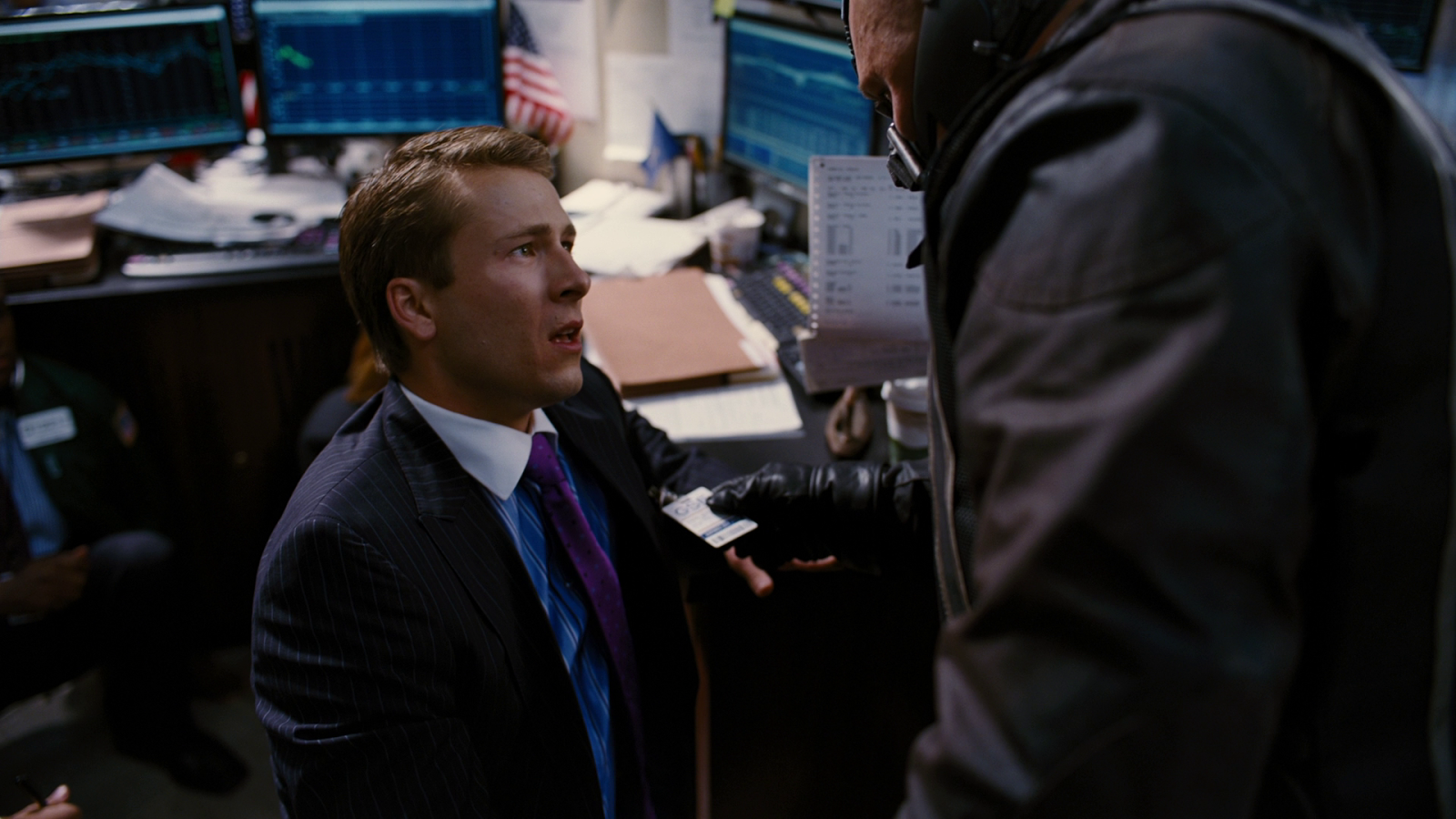
16:9 - The Dark Knight (2008)


16:9 - The Dark Knight Rises (2012)
So call me whatever you want, but I'm a huge fan of the way Christopher Nolan goes about his business, and the end products. Now these stills are BluRay copies of these two films, in which all the 16:9 sequences have been cropped down from their original IMAX film aspect ratios. This is 1.43:1, or in a closer comparison to what I've been blabbering on about so far, roughly 14:10, so closer still to a square frame. For me, the set pieces done like this (as displayed from the Dark Knight) are even more stunning than usual, and coupled with the IMAX cinema screens, completely and utterly engrossing. The interesting part is that after the overall success of this film, Nolan decided to employ the format in closer, dialogue heavy, action set-piece lighter scenes, and I don't think it detracts from them at all. And I see the format jumping from scene to scene as personal preference, personally I didn't really notice it that much and it didn't affect me, but then I was with one or two individuals who found it rather jarring. So each to their own on that front I guess. But either way, I reckon it's quite brave to move from 2.35:1 to full frame.

And just one more thing before I go.


2.35:1 - Batman Begins (2005)

During the screening of The Dark Knight Rises they had flashbacks to this scene from Batman Begins, which didn't employ any IMAX cameras at all, and was shot at the same aspect ratio all the way through. Seeing it on the biggest of the big screens though, I couldn't help but think, what would it be like with that little bit more?

So there you have it, a little bit about my own personal preferences with framings, and a load of rambling on clearly outlining why I'm not a cinematographer...

Oh, and a full post on aspect ratio without once mentioning The Grand Budapest Hotel, not bad eh?


No, wait, there it is.... 4:3, why not?

Edit: I've been informed that Birdman was shot at 1.85:1 instead of 16:9, same principles still apply, just my eyesight that's dodgy.